
Home » GFCI vs AFCI
GFCI vs AFCI
Home » GFCI vs AFCI
GFCI vs AFCI
Compare
They sound alike and both have a test button. One protects people from shock, the other protects the house from fire — and some locations need both.
A GFCI (ground-fault circuit interrupter) watches for current leaking out of a circuit — through water, or through a person — and cuts the power in a fraction of a second. An AFCI (arc-fault circuit interrupter) watches for the electrical signature of arcing — a damaged cord, a loose connection, a nail through a cable — and cuts the power before the arc can start a fire.
Neither replaces the other, and neither replaces an ordinary breaker, which protects the wiring from overload. Here is how they compare in practice.
| GFCI | AFCI | |
|---|---|---|
| Protects against | Electric shock from current leaking to ground | Fires caused by arcing in wiring, cords and connections |
| What it detects | An imbalance between outgoing and returning current, measured in milliamps | The high-frequency signature of an arc, which a standard breaker does not see |
| Typical locations | Bathrooms, receptacles near sinks and tubs, outdoors, pools and hot tubs | Most receptacle circuits in living areas and bedrooms of a dwelling |
| Forms available | Receptacle, breaker, and portable or in-line units | Breaker, and receptacle-type devices for some situations |
| Common nuisance trips | Moisture in outdoor boxes, failing appliance heating elements | Some older motors, worn cords and certain electronics |
| Does an older home need it retrofitted? | Not as a rule — but adding it near water is one of the best-value safety upgrades there is | Not as a rule — it is required when circuits are added or extended |
| Test it | Monthly, with the test button | Monthly, with the test button |
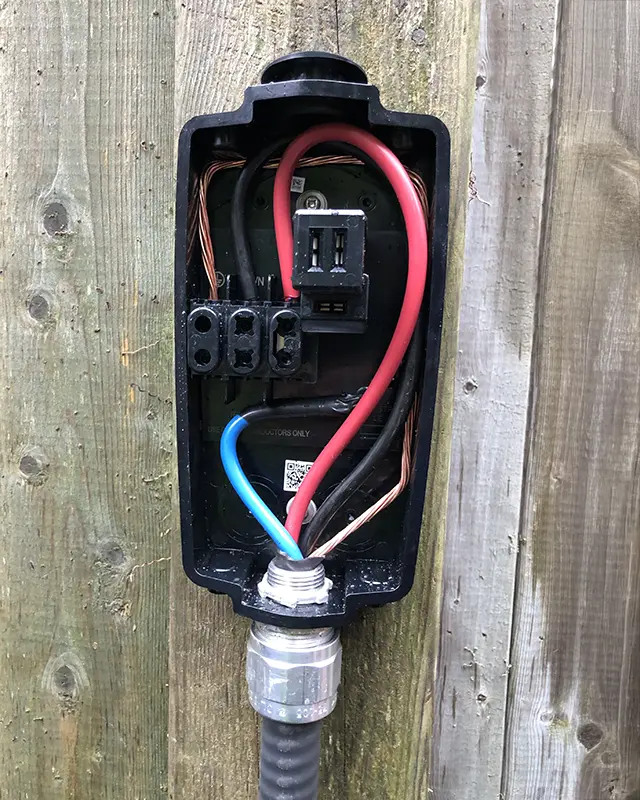
The Ontario Electrical Safety Code requires GFCI protection where water and electricity meet: receptacles near sinks and tubs, bathrooms, outdoors, and around pools and hot tubs, among others. Hot tubs and pools also need bonding, which is a separate requirement.
AFCI protection has been expanded through successive Code editions and now applies to most 15- and 20-amp receptacle circuits in a dwelling, with specific exceptions. The practical upshot for an existing home: you are not required to retrofit, but when circuits are added or extended during a renovation, current requirements apply to that work.
A few locations need both. Dual-function breakers that provide GFCI and AFCI protection in one device make that straightforward in a modern panel.

A GFCI that trips is usually telling you something real: moisture in an outdoor receptacle, a kettle or heater with a failing element, an extension cord lying in water. Resetting it without finding the cause is the one thing not to do repeatedly.
AFCIs have a reputation for nuisance tripping, and some of it is earned — certain older motors and electronics produce noise an AFCI reads as arcing. But a genuinely damaged cord, a loose termination or a nail through a cable will trip one too, and those are exactly the faults it exists to catch. If an AFCI trips repeatedly on one circuit, it is worth having the circuit checked rather than the breaker swapped.
Fuse panels cannot take GFCI or AFCI breakers at all, and some older breaker formats have limited options. In those homes, GFCI protection is usually added at the receptacle, which works well. AFCI options are narrower, which is one of the honest reasons an older panel eventually gets replaced — see fuse box vs breaker panel.
A GFCI detects current leaking to ground and cuts power to protect people from shock. An AFCI detects the signature of an electrical arc and cuts power to prevent fires starting in wiring. They protect against different hazards, and some locations require both.
Where water and electricity meet: receptacles near sinks and bathtubs, bathrooms, outdoor receptacles, and pool and hot tub equipment, among other locations set out in the Ontario Electrical Safety Code.
Not as a rule. AFCI requirements apply to new and extended circuits, so they come into play during renovations and additions rather than requiring a retrofit of an existing home.
Usually because something is leaking current: moisture in an outdoor box, an appliance with a failing heating element, or a damaged cord. Unplug everything on the circuit, reset it, and reconnect items one at a time to find the culprit.
Yes. A GFCI receptacle is a recognised way to provide shock protection on an ungrounded circuit in an older home. It protects people from shock; it does not create a ground for equipment that needs one.
Bonding, grounding, GFCI, AFCI and the rest, in plain English.
Read more →Which trips are faults developing and which are limitations.
Read more →Why older panels limit your protection options.
Read more →Related services: Electrical Repair · Pool & Hot Tub Wiring · Panel Upgrades.
Tell us what the house has and what you are planning. We will give you a straight answer.