
Home » Hardwired vs Plug-In EV Charger
Hardwired vs Plug-In EV Charger
Home » Hardwired vs Plug-In EV Charger
Hardwired vs Plug-In EV Charger
Compare
Both deliver Level 2 charging. The differences are in maximum speed, how the connection holds up over years of daily use, and whether you want to take the charger with you.
A Level 2 charger can be hardwired — connected permanently to its own circuit — or plugged in to a 240-volt receptacle, usually a NEMA 14-50, installed on a dedicated circuit. Both are legitimate, both need an ESA notification, and both start with the same load calculation.
The choice comes down to how fast you need to charge, where the charger will live, and how much you value being able to unplug it and take it with you.
| Hardwired | Plug-in (240 V receptacle) | |
|---|---|---|
| Maximum charging current | Up to 48 amps on a 60-amp circuit, where the car and service allow | Typically 32–40 amps on a 50-amp receptacle circuit |
| Connection over time | Permanent terminations; nothing to wear | Plug and receptacle see repeated stress; receptacle quality matters a great deal |
| Outdoor installation | Generally preferred — fewer exposed connections | Possible with the right weatherproof receptacle and cover |
| Moving house | Stays with the house unless removed | Unplug it and take it with you |
| Swapping chargers later | An electrician reconnects the new unit | Plug in a compatible replacement |
| Load management | Widely supported | Supported, depending on the charger |
| ESA notification | Yes | Yes |
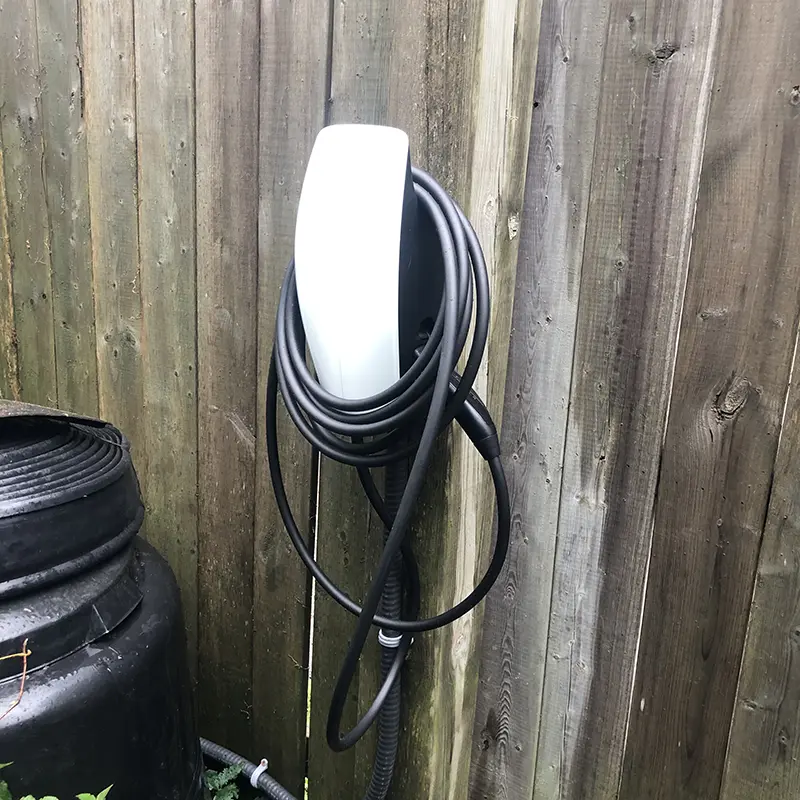
If you drive a lot, have two EVs, or have a vehicle that can accept more than 32 amps at home, hardwiring gives you the highest charging rate the car, charger and service allow. It also removes the receptacle — the one component in a plug-in setup that can wear or overheat with years of daily, hours-long use.
For an outdoor or driveway installation, hardwired is usually our recommendation: fewer exposed connections and nothing for weather to work on.
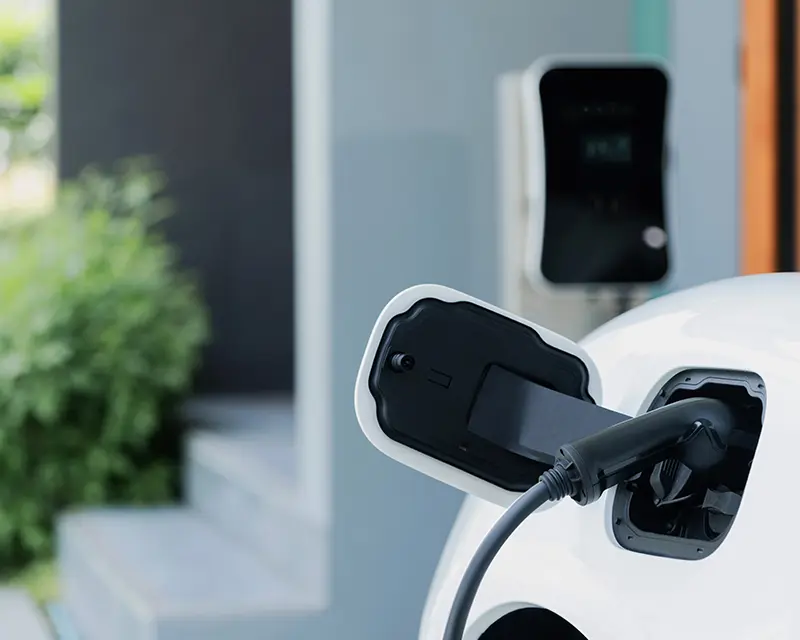
A plug-in charger in a garage is a perfectly good solution for most drivers. A 32-amp charge adds a full day’s driving in a few hours overnight. The advantages are flexibility — take it when you move, swap it without an electrician — and the fact that the receptacle can serve other equipment.
The caveat is the receptacle itself. An EV draws close to its rated current for hours at a time, which is a far harder duty than a range or a dryer. A heavy-duty, properly terminated receptacle is not an optional extra.
Either way, the work starts with the calculated load, which decides whether the service can carry the charger as it is, with a load management device, or with an upgrade. The charger needs a dedicated circuit, the work is notified to the ESA, and the location should suit where you actually park.
For detached homes specifically — garage versus driveway, cable runs and capacity — see our guide to EV charger installation for detached homes.
Hardwiring allows the highest charging current and removes the receptacle as a wear point, so it is usually preferred for heavy use and outdoor installs. A plug-in charger is a good choice in a garage when flexibility and portability matter more than maximum speed.
Typically 32 to 40 amps on a 50-amp receptacle circuit, which adds a full day's driving in a few hours. Hardwired chargers can go higher where the vehicle and electrical service support it.
Installing the 240-volt receptacle and circuit is notifiable work, so yes — it needs an ESA notification and inspection, just as a hardwired charger does.
A plug-in charger, yes — unplug it and leave the receptacle. A hardwired charger can be removed by an electrician, but it is more often left with the house.
It depends on the calculated load, not the panel's size. Many homes can add a charger as they are; others need a load management device or, less often, a service upgrade.
Garage or driveway, cable runs, capacity and permits.
Read more →When a standard outlet is genuinely enough.
Read more →Whether your service can carry a charger.
Read more →Related services: EV Charger Installation · Panel Upgrades · Residential Electrical.
Tell us what the house has and what you are planning. We will give you a straight answer.