Key takeaways
- Knob-and-tube wiring is not banned in Ontario. The ESA permits existing K&T to stay in service if it is protected by a 15-amp fuse or breaker, no outlets have been added to the original circuits, and the conductors are in sound condition.
- “All knob-and-tube must be replaced” is a myth the ESA names directly — but it is repeated by almost every contractor page on the subject.
- The real constraint is insurance, not code. Many Ontario insurers decline new policies on un-remediated K&T, and those who do write it often load the premium heavily.
- K&T was designed to shed heat into open air. Burying it in modern attic insulation is one of the most common and most dangerous things done to these circuits — and it is usually done by well-meaning energy retrofits.
- There is no ground conductor anywhere in a true K&T system, which is why three-prong outlets on these circuits are so often wired incorrectly.
If a home inspector has just written “knob-and-tube wiring present” on a report for a house in
Forest Hill, The Annex, Leaside or Riverdale, you have probably already been told it all has to come out.
That is the single most repeated claim about old Toronto wiring, and the Electrical Safety Authority
explicitly calls it a myth.
The short version: knob-and-tube wiring is not illegal in Ontario, and the ESA permits it
to remain in service when three specific conditions are met. The question that actually decides most
Toronto rewires is not whether the ESA will allow it to stay — it is whether your insurer will write a
policy on it. Those are two different tests, and they give different answers.
Is knob-and-tube wiring legal in Ontario?
Yes. There is no rule in the Ontario Electrical Safety Code requiring existing knob-and-tube wiring to be
torn out, and no deadline by which it must be gone. The ESA’s own guidance on the subject is unusually
blunt: it lists “all knob-and-tube wiring must be replaced” as a misconception rather than a
requirement.
What the Code regulates is new work. You cannot install knob-and-tube today, and you cannot extend
an existing K&T circuit. But wiring that was legal when it was installed — and in a 1912 house in
Cabbagetown or a 1920s semi off St. Clair, it was the standard of the day — is allowed to remain,
provided it still satisfies the conditions below.
This matters because the alternative framing costs homeowners a great deal of money. A blanket
“it all has to go” turns a targeted $6,000 problem into a $25,000 project. Sometimes a full rewire
genuinely is the right answer. It should be a decision, not a reflex.
The three ESA conditions, in plain English
The ESA allows existing knob-and-tube to remain where all three of the following hold. Miss one and the
installation is no longer compliant.
1. It is protected by a 15-amp fuse or breaker
K&T conductors were sized for 15 amps. The single most common defect we find is a 20-amp or 30-amp
fuse screwed into a socket feeding original wiring — usually because the old 15 kept blowing and someone
decided a bigger fuse was the fix. It is not. The fuse is the only overcurrent protection those conductors
have, and over-fusing removes it. If your panel is a fuse box, this is the first thing to check.
2. No outlets have been added to the original circuits
This is the condition that quietly disqualifies most Toronto houses. Ninety years of kitchen updates,
basement finishing, window air conditioners and home offices mean very few original circuits are still
original. Every added receptacle spliced into a K&T run puts more load on conductors that were never
intended to carry it, and the splice itself is usually the weak point.
3. The conductors are in good condition
The insulation on knob-and-tube is rubber, often with a cloth braid over it. Rubber embrittles with age
and heat. After ninety to a hundred years it can crack and flake off the copper when disturbed —
sometimes just from an electrician moving a wire aside to work. “Good condition” means visibly
intact insulation, sound supports, and no brittleness where the conductors enter boxes and fixtures.
Why knob-and-tube fails
Understanding the failure modes is what separates a sensible remediation plan from a panic rewire.
K&T does not fail because it is old. It fails for four specific reasons.
It was designed to be cooled by air. The defining feature of the system is that the hot
and neutral conductors run separately, held off the framing by porcelain knobs and passed through joists in
porcelain tubes. That spacing is not decorative — it lets heat dissipate into the open cavity. When a
house is retrofitted with blown-in attic insulation, those conductors get buried, the heat has nowhere to
go, and the rubber cooks. This is the most common serious defect in Toronto’s older housing stock, and it is
almost always the result of a well-intentioned energy upgrade done without an electrician looking first.
There is no ground. A true knob-and-tube installation has two conductors and no equipment
ground anywhere in the system. This is why you so often find three-prong receptacles on K&T circuits that
are not actually grounded — someone swapped the outlet without being able to swap what feeds it.
Anything you plug in expecting a ground, including most surge protection, is not getting one.
The splices are the weak point. Original K&T joints were soldered and taped, and a
properly made one can still be sound today. The problem is the later ones: decades of additions spliced into
the run, frequently outside a box, sometimes just twisted and taped inside a ceiling cavity.
The insulation embrittles. Rubber has a service life. Past about eighty years it becomes
fragile enough that ordinary disturbance can expose bare copper.
The insurance problem: legal is not the same as insurable
This is the part that decides most projects, and it has nothing to do with the ESA.
Home insurers treat knob-and-tube as an elevated fire risk, and they set their own terms. In practice,
Ontario homeowners run into one of three responses: an insurer that declines to write a new policy on the
home at all; one that writes it with a significantly loaded premium; or one that offers coverage on the
condition the wiring is remediated within a set window, often a year.
Underwriting appetite varies a great deal between carriers and changes over time, so the only reliable
move is to ask your own insurer or broker directly and get the answer in writing before you plan the work.
Two things are worth asking specifically: whether partial remediation with documentation is acceptable, and
what evidence they want — many will accept an ESA Certificate of Inspection or a letter from a licensed
contractor.
This is also the answer to the most common question we get from buyers: a house with K&T is sellable
and financeable, but the wiring may narrow the buyer’s insurance options, and that tends to surface during
the conditional period rather than at listing.
What rewiring a Toronto century home actually involves
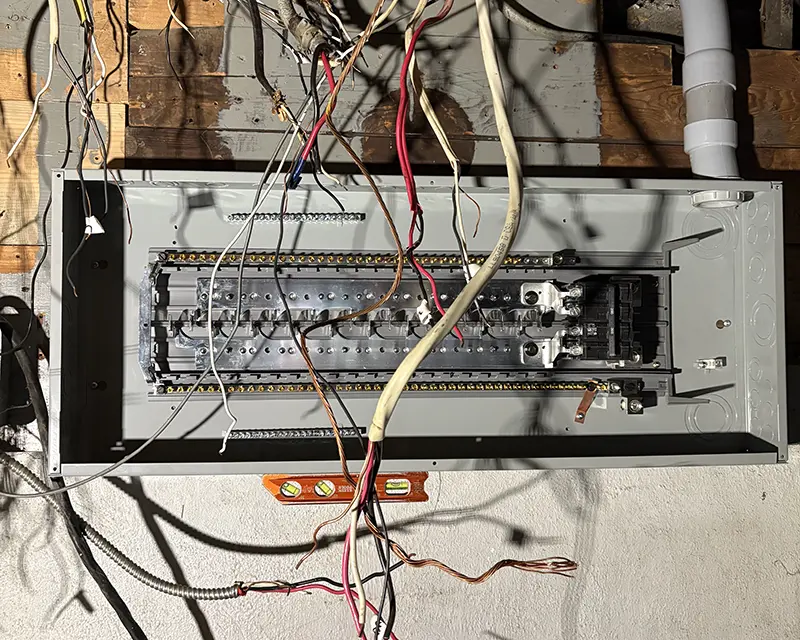
The work is less about wire and more about access. Running new cable is straightforward; getting to where
it needs to go through lath-and-plaster walls, balloon framing and finished ceilings is the job.
A full rewire means a new circuit from the panel to every device in the house, a proper equipment ground
throughout, new boxes at every outlet and fixture, and dedicated circuits where the Code now requires them
— kitchen counter receptacles, bathrooms, laundry. It almost always includes arc-fault protection for
the circuits that now require it, and in most century homes it includes a service and panel upgrade, because
a 60-amp fuse service will not support the circuit count a modern rewire creates.
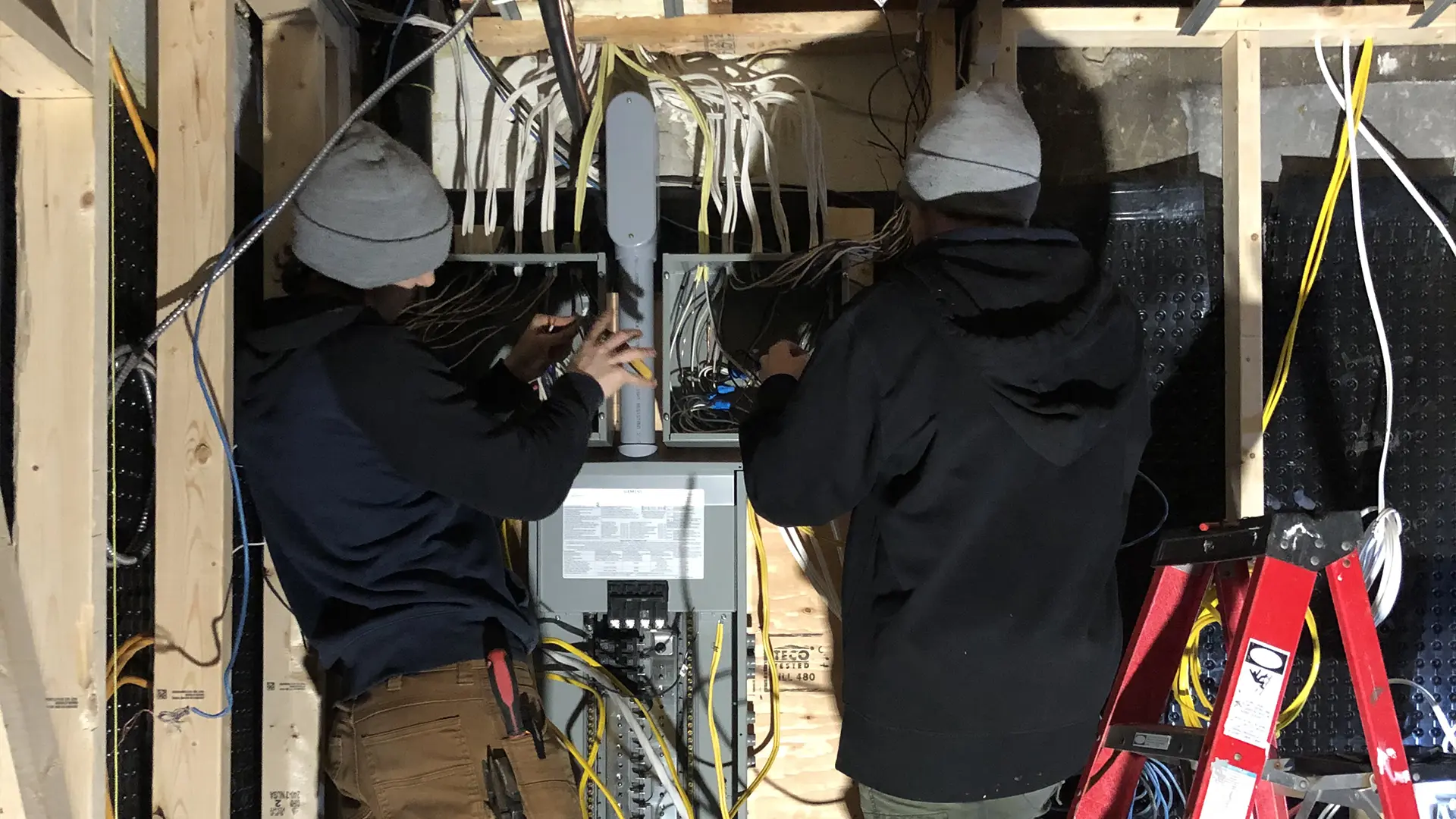
The sequence that keeps disruption down is: assess and map the existing circuits, agree the scope room by
room, do the service and panel first so there is somewhere to land the new circuits, then rough-in by zone,
then ESA inspection, then restoration. On an occupied house we normally work zone by zone so the family
keeps power in the rest of the home throughout.
Plaster restoration is a real part of the budget and is worth settling in writing before work starts.
Under Ontario’s consumer protection rules a written contract has to set out who prepares and cleans the work
area — use that clause. Getting clarity on whether your electrician patches, or whether you are hiring
a plasterer separately, prevents the most common dispute on these projects.
What it costs
The honest answer is that rewire pricing is driven by access, not by square footage, which is why
published ranges are so wide. What follows is what we typically quote for this work in Toronto, at the
standard of finish our clients expect — proper restoration, dedicated circuits, and a service that
supports the house afterwards. Budget shops will quote less; the difference usually shows up in the
patching and in how many original circuits actually get retired.
- Full rewire, 1,500–2,500 sq ft detached: roughly $16,000–$30,000, including
a new panel and service where the existing one cannot carry the work. - Smaller semi or row house: typically $11,000–$19,000.
- Large pre-1930 home with three finished floors and original plaster: past $35,000 is
common. - Partial or targeted rewire — retiring the K&T that is actually in service and
leaving abandoned runs in place: roughly $5,000–$14,000 depending on how many circuits are live.
Two fees are fixed by others and should appear on any honest quote at their real value. The ESA
notification for a service or panel change filed by a licensed contractor is $86, against a $92 minimum
notification fee. If a quote lists “ESA permit — $400”, roughly $92 of that is the
regulator and the rest is the contractor’s administration. Toronto Hydro’s charge to isolate the service is
$120 at the meter or $300 at the pole during regular hours — not the $678 figure that circulates on
forums, which appears nowhere in their Conditions of Service. We break both down in our
guide to what electricians charge in
Toronto.
Partial or full? How to decide
A full rewire is the right call when the house is already open for a renovation, when the insurer requires
complete remediation, when the service is being upgraded anyway, or when enough original circuits are still
live that a partial job would leave you doing it twice.
A targeted remediation makes more sense when only a handful of K&T circuits remain energised, when
previous owners already rewired the kitchen and bathrooms, or when the property is a rental or an interim
hold rather than a long-term home. A great many Toronto houses are in this position: the K&T that shows
up on the inspection report is two circuits feeding upstairs bedroom lighting, and everything else was
replaced in the 1980s.
The decision needs a circuit map, not a guess. An electrical inspection that traces which
circuits are actually live, what is feeding them and what has been added is worth doing before you take any
quotes — it is the difference between pricing a defined scope and pricing an unknown.
How to tell whether your house has it
Knob-and-tube is easiest to identify in unfinished spaces. In a basement or attic, look for white or
dark-brown porcelain knobs holding single conductors clear of joists, and porcelain tubes where wires pass
through framing. The conductors run individually, spaced apart, rather than together in a single sheathed
cable.
Signs the system has been altered in ways that disqualify it: fuses larger than 15 amps, modern cable
spliced into an old run, three-prong receptacles in rooms that are otherwise untouched, or attic insulation
covering the conductors. None of these are things to test yourself with the power on.
Finding knobs and tubes in the basement also does not, by itself, mean the system is live. Many Toronto
homes have decommissioned K&T still stapled in place, because removing it is labour with no electrical
benefit. Determining what is actually energised takes a meter and a licensed electrician.
If you want that assessed properly, we work on exactly this housing stock across the city — see our
residential electrical services in
Toronto, or get in touch and we will map what you
have before anyone talks about tearing out walls.
Frequently asked questions
Does knob-and-tube wiring have to be removed in Ontario?
No. The Electrical Safety Authority permits existing knob-and-tube to remain in service where it is protected by a 15-amp fuse or breaker, no outlets have been added to the original circuits, and the conductors are in good condition. The ESA specifically identifies “all knob-and-tube must be replaced” as a myth. What you cannot do is install new K&T or extend an existing circuit.
Can I get home insurance with knob-and-tube wiring?
Sometimes, but it is the most common practical obstacle. Many Ontario insurers decline new policies on un-remediated knob-and-tube, and others write it with a substantially higher premium or on condition that the wiring is remediated within a set period. Appetite varies by carrier and changes over time, so confirm with your own insurer or broker in writing before planning the work.
Is it safe to put insulation over knob-and-tube wiring?
No, and this is the defect we find most often. Knob-and-tube depends on open air around the conductors to shed heat. Burying it in blown-in or batt insulation traps that heat against rubber insulation that is already decades old. If you are planning an attic insulation upgrade on an older Toronto home, have the wiring assessed first.
How much does it cost to rewire a Toronto house?
For a 1,500–2,500 sq ft detached home we typically quote roughly $16,000–$30,000 for a full rewire including a new panel and service where needed. Smaller semis generally run $11,000–$19,000, and targeted remediation of the circuits still in service is often $5,000–$14,000. Access through plaster, not floor area, is the main cost driver.
Do I need to upgrade my panel when I rewire?
Usually, yes. A rewire creates far more circuits than an original 60-amp fuse service was built to carry, including the dedicated kitchen, bathroom and laundry circuits the Code now requires. In most century homes the service and panel are done first so the new circuits have somewhere to land. Our panel upgrade cost guide covers that side in detail.
Can you rewire a house without tearing out the plaster?
Partly. Experienced crews fish a great deal of cable through existing cavities, and in balloon-framed Toronto houses the vertical runs are often easier than people expect. But some openings are unavoidable, particularly at horizontal runs and at every new box. Any contractor promising zero damage on a full rewire of a plaster house is not describing the same job.
Regulatory figures in this article are the Electrical Safety Authority’s published residential fees effective April 1, 2026, and Toronto Hydro’s published Standard Service Charges. Cost ranges reflect typical GTA market pricing together with our own quoting experience, and are not a quotation. Insurance practices vary by carrier — confirm your own position with your insurer or broker.