Home » Home Rewiring
Home Rewiring
Old Wiring
Knob-and-tube, aluminum terminations and century-home service entrances — assessed properly, then replaced zone by zone so you keep living in the house.
Rewiring is less about wire and more about access. Running new cable is straightforward; getting to where it needs to go through lath-and-plaster, balloon framing and finished ceilings is the job. Most of what we do here is in homes built before 1960, where ninety years of alterations have been layered onto original circuits.
Full or targeted. The ESA permits K&T to remain under three specific conditions — we establish whether yours actually meets them before recommending anything.
Aluminum is permitted by the Code and is not inherently a hazard. It fails at terminations, and the fix is correct devices and technique, not wholesale removal.
A new circuit to every device, a proper equipment ground throughout, and the dedicated circuits the Code now requires for kitchens, bathrooms and laundry.
A rewire creates far more circuits than an original fuse service was built to carry, so the service and panel usually go in first.
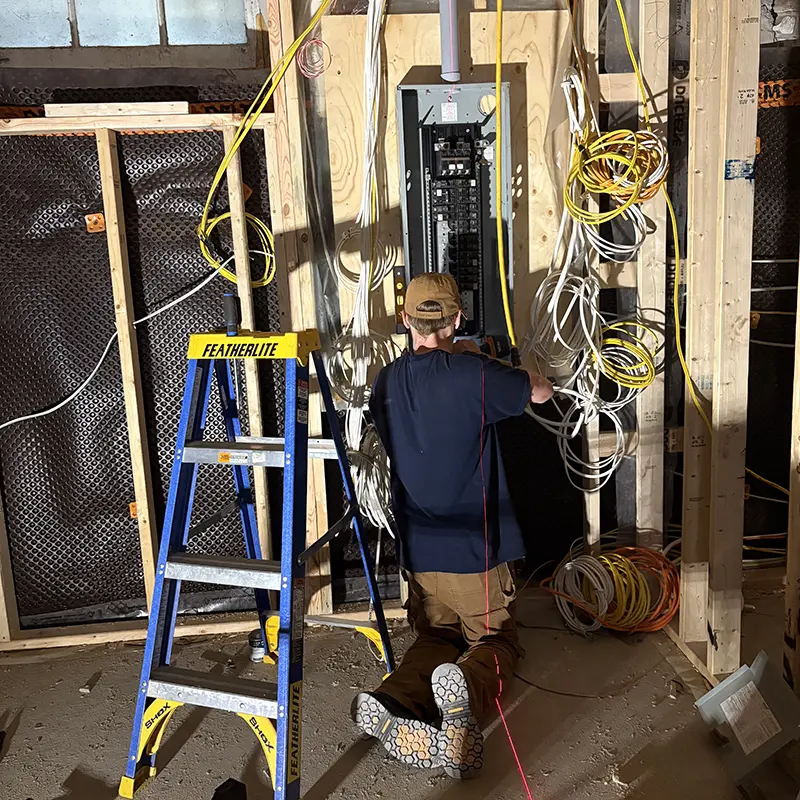
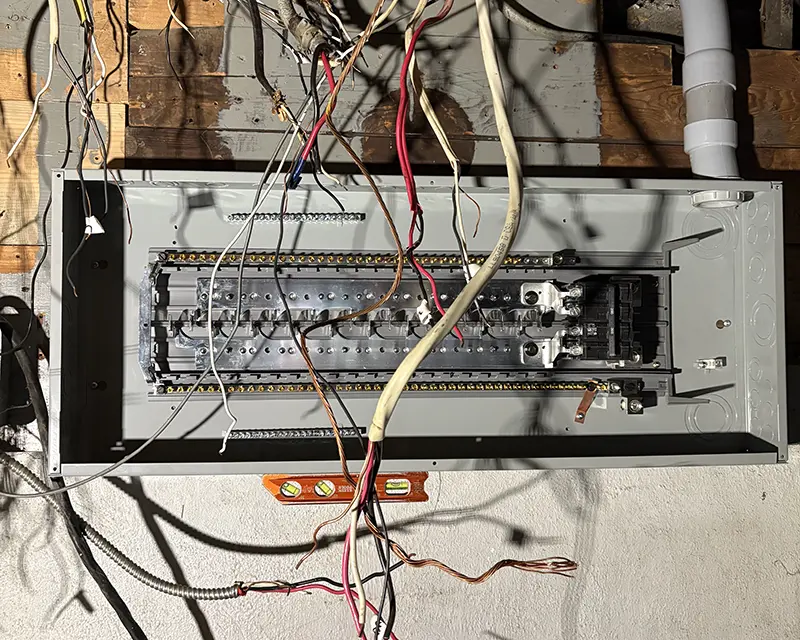
Understanding the failure modes is what separates a sensible remediation plan from a panic rewire.

Knob-and-tube was designed to shed heat into open air, held off the framing by porcelain knobs. Blown-in attic insulation traps that heat against rubber that is already decades old. It is the most common serious defect we find, and it is almost always the result of a well-meant energy upgrade.
A true knob-and-tube system has two conductors and no ground anywhere. That is why three-prong receptacles on these circuits so often are not actually grounded — someone swapped the outlet without being able to swap what feeds it.
Original soldered joints can still be sound. The problem is the later ones: decades of additions spliced into the run, sometimes outside a box, occasionally just twisted and taped inside a ceiling cavity.
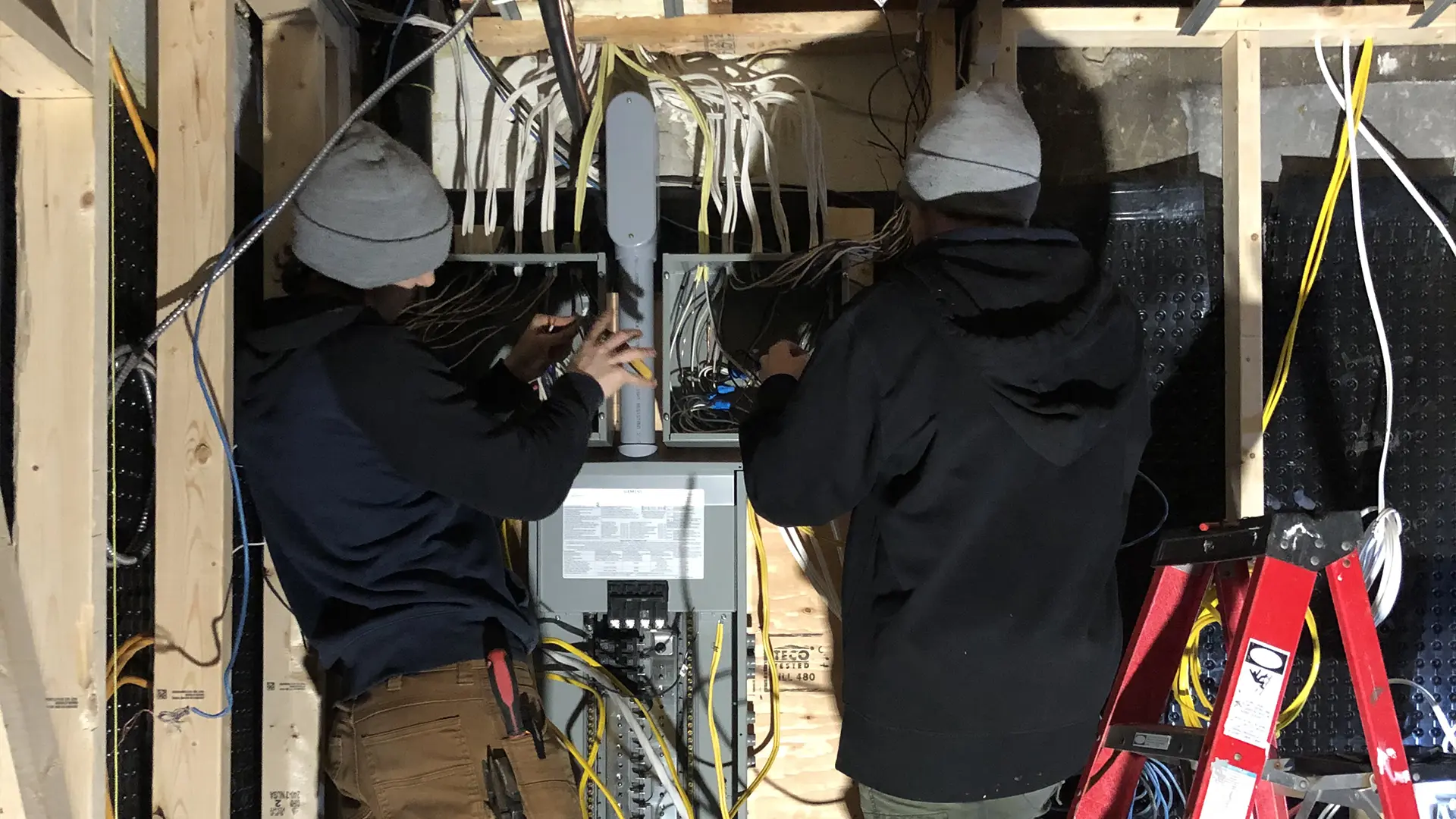
Finding knobs and tubes in a basement does not mean the system is energised. We trace which circuits are live, what feeds them and what has been added, so you are pricing a defined scope.
The service goes in first so the new circuits have somewhere to land. Then we work zone by zone, so an occupied house keeps power everywhere we are not working.
ESA inspection on completion, then restoration. Who patches, and to what standard, is settled in writing before we start.
We cover Toronto and the west GTA: Toronto · York · Etobicoke · East York · Mississauga · Vaughan · Oakville. See every area on our service areas page.
No. The ESA permits existing knob-and-tube to remain where it is protected by a 15-amp fuse or breaker, no outlets have been added to the original circuits, and the conductors are in good condition. The ESA specifically calls “all knob-and-tube must be replaced” a myth. What you cannot do is install new K&T or extend an existing circuit.
Sometimes, and it is the most common practical obstacle. Many Ontario insurers decline new policies on un-remediated knob-and-tube, and others write it at a significantly loaded premium or on condition it is remediated within a set period. Confirm your own position with your insurer or broker in writing before planning work.
Often not. A great many Toronto homes have only two or three original circuits still energised, with the kitchen and bathrooms already replaced. A targeted remediation retires what is actually in service. A full rewire makes sense when the house is already open, when the insurer requires it, or when enough original circuits remain that a partial job means doing it twice.
Not inherently. The Ontario Electrical Safety Code permits aluminum branch wiring, and the ESA calls the idea that it is recalled or inherently a fire hazard a myth. Failures happen at terminations. The remedy is copper pigtails with connectors rated for the purpose, or devices marked CO/ALR or AL-CU — and never push-in terminations, which are prohibited with aluminum.
Partly. Experienced crews fish a great deal of cable through existing cavities, and balloon-framed Toronto houses often make vertical runs easier than people expect. But some openings are unavoidable, particularly at horizontal runs and at every new box. Anyone promising zero damage on a full rewire of a plaster house is describing a different job.
The three conditions that let it stay, and why insurance is the real constraint.
Read more →A rewire usually needs a service upgrade first. Here is what that involves.
Read more →Rewire ranges by house type, plus what the ESA portion of a quote covers.
Read more →Related services: Panel Upgrades · Electrical Inspections · Residential Electrical.
We will map what is actually live before anyone talks about opening walls.