
Home » Ontario Electrical Myths
Ontario Electrical Myths
Home » Ontario Electrical Myths
Ontario Electrical Myths
Myth-buster
Most of what homeowners are told about old panels, old wiring and permits is half-true at best. Here are the twelve we correct most often — with the facts and where they come from.
Electrical work attracts myths because the stakes sound high and the rules are genuinely technical. Some myths are harmless. Others cost people money — a panel replaced because it was “recalled”, a rewire sold as “required by law”, a quote padded with a “permit” line nobody explains.
Each correction below is based on the Ontario Electrical Safety Code, the ESA’s own published positions, or utility conditions of service, and links to a longer explanation where we have one.
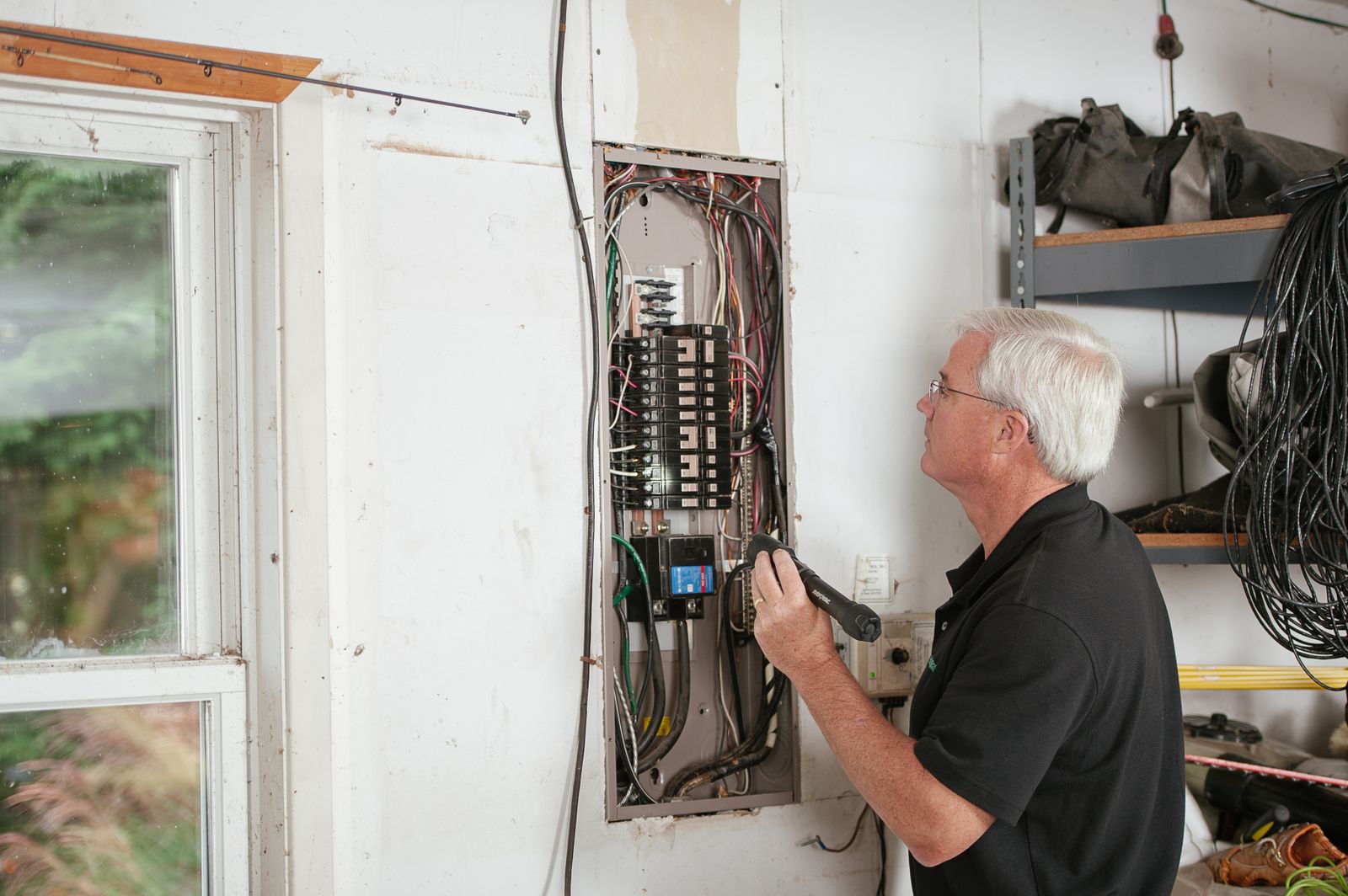
Fact: Ontario has no municipal electrical permit. Electrical work is notified to the Electrical Safety Authority and inspected by the ESA. A building permit may still be needed for the construction around it, but that is a separate thing.
Read more: ESA permits and inspections.Fact: Fuse panels remain legal in owner-occupied Ontario homes. The real risks are over-fusing — a larger fuse that physically fits and removes the circuit's protection — and running out of capacity.
Read more: fuse box vs breaker panel.Fact: The ESA allows knob-and-tube to remain in service when it is in good condition, has not been improperly altered and is not buried in insulation. In practice, insurance decides most knob-and-tube rewires, not regulation.
Read more: what the ESA actually says.Fact: There is no Canadian regulatory recall of Federal Pioneer Stab-Lok panels. Two narrow, voluntary breaker recalls exist and are routinely misreported as a panel recall. There can still be good reasons to replace an old panel — just not that one.
Read more: Stab-Lok panels in Canada.Fact: Aluminum branch wiring is permitted in Ontario. Its problems happen at connections that were not rated for aluminum, and the remedy is correct terminations rather than, in most cases, a rewire.
Read more: aluminum wiring in Ontario.Fact: What decides it is the calculated load, not a rule of thumb. Many 100-amp homes take a Level 2 charger, sometimes with a load management device that shares capacity automatically.
Read more: 100-amp vs 200-amp service.Fact: Three-prong receptacles on circuits with no ground conductor are common in older homes. They look modern and fail a basic tester. Where a ground is not available, GFCI protection is the recognised alternative.
Read more: GFCI vs AFCI.Fact: Occasionally it is. Far more often the breaker is doing exactly its job — protecting an overloaded circuit or one with a developing fault. Replacing it without finding out why is how problems get hidden.
Read more: is this an electrical emergency?Fact: You are billed for the energy you use, not the capacity available to you. A 200-amp service that sits mostly idle costs no more to run than a 100-amp one.
Fact: Underground distribution resists storm damage on your street, but upstream feeders and transformer stations still fail. In August 2026 a single upstream failure in Toronto cut power to roughly 31,000 customers.
Read more: standby generators.Fact: Only fixtures rated IC may be in direct contact with insulation. In a top-floor ceiling under an insulated attic, IC-rated fixtures are a requirement, not an upgrade.
Read more: IC rating explained.Fact: In Ontario a homeowner may do electrical work in a single dwelling they own and live in — but must still notify the ESA and have it inspected. Rental units and multi-unit buildings are a different matter.
Read more: ESA permits and inspections.
The Electrical Safety Authority. It licenses electrical contractors, receives notifications of work, inspects it, and publishes guidance on topics like knob-and-tube and aluminum wiring. Municipalities regulate building construction but not the electrical installation itself.
Partly because rules have changed over decades and old advice lingers, partly because American information — different codes, different regulators — dominates search results, and partly because some myths help sell work. A claim that something is illegal or recalled deserves a source.
Ask which rule or recall they are referring to. A legitimate concern — over-fusing, damage, no capacity, an insurer's requirement — can be named specifically. “Illegal” or “recalled” without a reference is a reason to get a second opinion.
No. The United States uses the National Electrical Code; Ontario uses the Ontario Electrical Safety Code, based on the Canadian Electrical Code. Requirements, terminology and even recall histories differ, so US articles are an unreliable guide here.
Our cost guides set out what typical jobs involve and what published fees actually are, and Ontario's consumer protection rules require written renovation contracts to itemise the work. A good contractor will explain every line without being asked twice.
The published fees, and what the rest of a quote line actually covers.
Read more →The most expensive myth on this list, examined in detail.
Read more →The vocabulary behind every myth on this page.
Read more →Related services: Electrical Inspections · Panel & Service Upgrades · Home Rewiring.
Ask us. We will tell you what the Code actually says — whether or not you hire us.