Electrical Repair Etobicoke

Etobicoke · Electrical Repair

Electrical Repair in Etobicoke

Service calls across Etobicoke — warm outlets, aluminum terminations and dead circuits in the post-war belt, fixed with the right devices.

ECRA/ESA Licence #7014949$5M Liability InsuredWSIB Covered5.0★ · 50+ Google Reviews

Electrical Repairs in Etobicoke

Etobicoke’s repair calls follow its housing. Near the lake they look like old Toronto. Across the big 1960s and 70s subdivisions they look different — and a surprising number come back to how aluminum branch wiring was terminated half a century ago.

Warm outlets and switches

On a 1960s or 70s Etobicoke house, a warm switch plate is a termination problem until proven otherwise. We check it properly.

Intermittent dead outlets

Circuits that work, stop, then work again usually mean a loose connection somewhere along the run.

Correct aluminum devices

Repairs on aluminum circuits use CO/ALR-rated devices, or copper pigtails with connectors made for the job.

Exterior and garage circuits

Attached-garage and exterior outlets take the weather and tend to fail first.
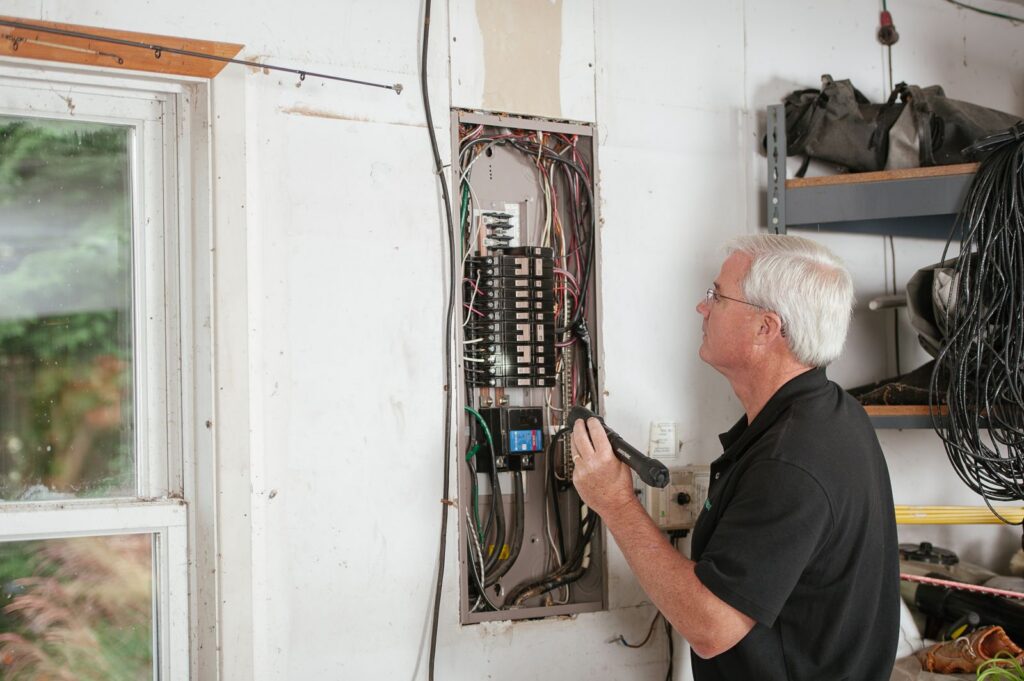
Electrician examining a residential breaker panel during an assessment
Traced, not guessedWe find the cause on the circuit, not just the dead device.

Repairs on Etobicoke's Two Eras

Which kind of house you have changes what a repair involves.

New residential breaker panel installed and terminated after a service upgrade
Etobicoke: what we actually findA warm switch plate on a 1960s–70s Etobicoke house is worth a call, not a wait. It is usually a termination, and terminations are where aluminum wiring problems live.

The aluminum belt

A large share of Etobicoke was built when aluminum branch wiring was standard. It is permitted by the Code and is not dangerous in itself — it fails where it is terminated. A standard receptacle installed on aluminum is the classic cause of a warm, intermittent outlet.

Lakeside pre-war houses

Mimico, New Toronto and Long Branch have older stock where knob-and-tube and early two-wire circuits still turn up. Repairs there follow old-Toronto rules: find out what the circuit actually is before touching it.

Push-in connections on aluminum

Push-in terminations are prohibited with aluminum. When we find aluminum wired into the back of a modern receptacle — which happens after DIY swaps — it gets re-terminated properly, not just put back.
Northcliffe Electric service van parked at a residential job site

How an Etobicoke Repair Runs

01

Identify the conductor

Copper or aluminum. It decides which devices and connectors we use.

02

Fix the termination, not just the device

On aluminum circuits the connection is the repair. We do it with rated hardware.

03

Check the neighbours

Where one termination has failed, others of the same age often follow. We tell you what we see.

Etobicoke Neighbourhoods We Serve

We work right across Etobicoke. If your street is not listed it almost certainly still counts — see electrical repair in full, or our Etobicoke electricians page.

The KingswayKingsway SouthMimicoNew TorontoLong BranchAlderwoodStonegate-QueenswayIslingtonIslington VillageMarkland WoodPrincess-RosethornEatonvilleThorncrest VillageEdenbridge-Humber ValleyHumber Bay ShoresEtobicoke City CentreEringateRichviewRexdaleSunnylea

Etobicoke Electrical Repair FAQs

Why is my outlet warm?

On a 1960s or 70s Etobicoke home, the most likely cause is an aluminum conductor terminated on a device not rated for it, or a connection that has loosened over decades of heating and cooling. Stop using it and have it looked at — a warm termination is how aluminum wiring problems start.

Can I replace an outlet myself on aluminum wiring?

It is the most common way the problem is created. Ordinary receptacles are not rated for aluminum, and push-in terminations are prohibited with it. Devices must be marked CO/ALR, or the aluminum pigtailed to copper with connectors rated for the purpose.

Is aluminum wiring dangerous?

Not inherently — the Ontario Electrical Safety Code permits it, and ESA calls the idea that it is recalled or inherently a fire hazard a myth. The risk is concentrated at terminations. Properly terminated aluminum circuits can serve safely for a long time.

My lights flicker on one circuit only. What does that mean?

Usually a loose connection somewhere on that circuit — at a switch, a fixture or a receptacle feeding the rest. On aluminum circuits it deserves prompt attention, because a loose aluminum connection tends to get worse rather than better.

Do you work in Mimico and Long Branch?

Yes, regularly. The lakeside communities have Etobicoke's oldest homes, where repairs often run into knob-and-tube or early two-wire circuits. We establish what the circuit is before recommending anything.

Repair needed in Etobicoke?

Warm outlet or dead circuit — we fix the termination, not just the device.