Key takeaways
- A standard 240-volt hot tub typically costs $2,400–$4,800 to wire; long runs, trenching or a sub-panel push it to $4,800–$8,500.
- A plug-in 120-volt tub still needs a dedicated GFCI-protected circuit — typically $600–$1,400.
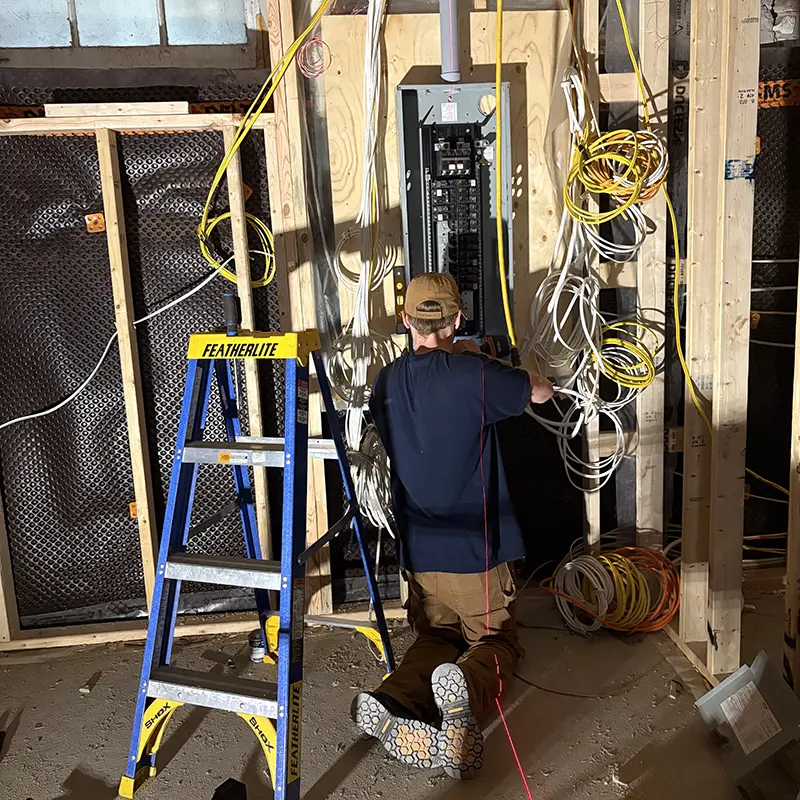
- Get a load calculation before you buy the tub. If the service is short, an upgrade comes first.
- The ESA fee for a hot tub is $168; GFCI protection, a correctly placed disconnect and bonding are mandatory.
- The route from panel to deck drives most of the cost on a Toronto lot.
Hot tub dealers are very good at telling you what the tub costs. They are much less forthcoming about the electrical, which is often the second-largest line in the project and occasionally the largest — when the house turns out not to have the capacity for a tub at all.
This guide sets out what it costs to wire a hot tub in Toronto and the west GTA in 2026, what drives the number, and the single check worth doing before you sign for the tub. It covers both “plug and play” 120-volt tubs and the more common 240-volt tubs.
The short version: a dedicated GFCI-protected receptacle for a plug-in tub typically runs $600 to $1,400. A standard 240-volt tub, where the panel has capacity and the run is reasonable, typically runs $2,400 to $4,800. Long runs, trenching, finished basements and sub-panels push that to $4,800 to $8,500. If the house cannot carry the tub, a service upgrade comes first. All figures are before HST and include the ESA notification, whose published fee for a hot tub is $168.
Plug-in vs 240-volt hot tubs
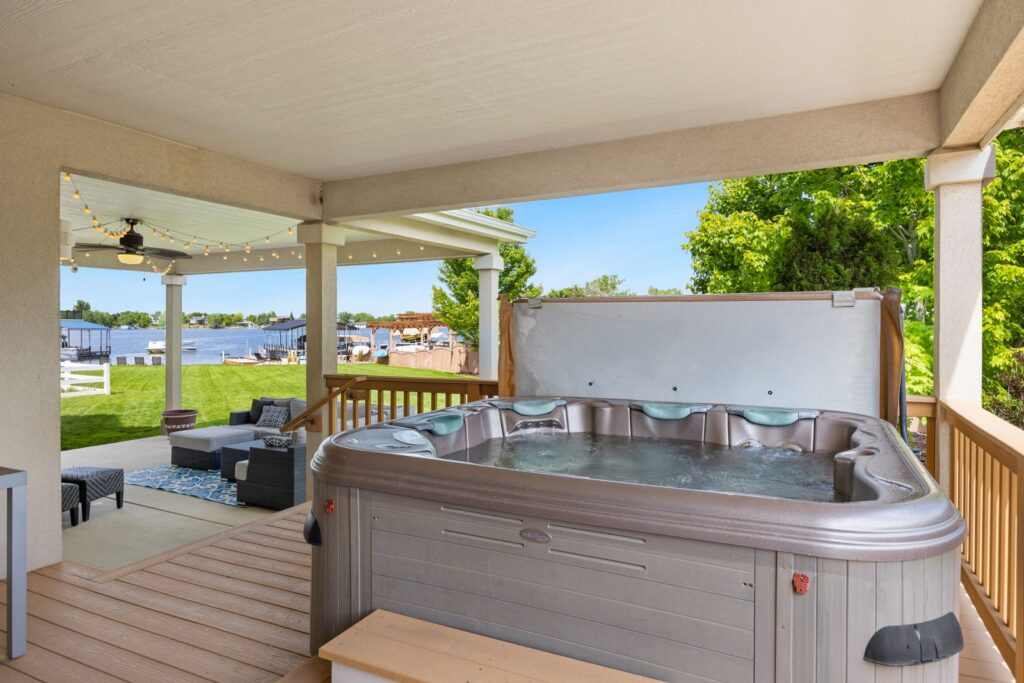
Plug-in tubs, often sold as “plug and play”, run on 120 volts from a GFCI-protected receptacle. They are cheaper to wire, but because the heater cannot run at full output while the jets are on, they heat slowly and lose ground quickly in a Toronto winter. Most need a dedicated 15- or 20-amp circuit, not just any outdoor outlet.
240-volt tubs are the norm for larger and better-built models. They typically need a dedicated 40- to 60-amp circuit, a GFCI-protected disconnect near the tub, and properly sized conductors from the panel. They heat faster, run the heater and jets together, and cope with winter far better.
If you are buying a tub for year-round use in the GTA, a 240-volt model is almost always the better choice, and it is what most of our hot tub work involves.
What we typically quote in 2026
These are the ranges we typically quote for hot tub electrical in Toronto and the west GTA, before HST. They include the ESA notification and inspection. They do not include the tub, the pad or deck, or any service upgrade.
| Scope | What it covers | Typical cost |
|---|---|---|
| Plug-in (120 V) tub | Dedicated circuit, GFCI-protected outdoor receptacle in a weatherproof in-use cover | $600–$1,400 |
| 240 V tub, standard install | Dedicated 40–60 A circuit, GFCI spa disconnect, conductors up to roughly 15 m, bonding | $2,400–$4,800 |
| 240 V tub, complex install | Long runs, trenching, routing through finished space, or a sub-panel | $4,800–$8,500 |
The ESA’s published fee for a hot tub notification is $168, and it is included in the figures above. Where a quote shows a larger “permit” line, the rest is the contractor’s time for filing and meeting the inspector.
If the load calculation shows your service cannot carry the tub, a service upgrade comes first. In Toronto, a 100-amp to 200-amp upgrade typically runs $4,000 to $6,000 on an overhead service and $5,000 to $7,500 underground; our panel upgrade cost guide explains why, and the Toronto Hydro process explains the timeline.
The one check to do before you buy the tub
Ask for a load calculation before you sign for the tub.
A hot tub is a large, long-running load. On a 200-amp service with gas heat and gas cooking, there is usually plenty of room. On a 100-amp service already carrying central air, a renovated kitchen, an electric dryer and perhaps an EV charger, there may not be. The calculation under the Canadian Electrical Code — not the number of empty spaces in the panel — decides it.
Doing it in the right order matters. If you buy the tub first and the calculation comes back short, your options are a service upgrade, which in Toronto involves a utility disconnect with a lead time of weeks, or a smaller tub. If you do the calculation first, you choose the tub knowing what the house can carry. Our 100-amp vs 200-amp service guide explains how the calculation works.
Bring the tub’s specification sheet or nameplate rating to the site visit. The amperage it lists decides the circuit size, the conductors and the disconnect.
What moves a hot tub quote
- Distance from the panel. Most of the variation in a standard install. On a Toronto lot, the panel is often at the front or in the basement and the deck is at the back. Every metre of heavy-gauge conductor is material and labour, and long runs need larger conductors to limit voltage drop.
- The route. An unfinished basement and an exterior wall are easy. A finished basement, a slab-on-grade addition or a route under a patio are not.
- Trenching. A tub away from the house needs an underground feed in conduit at the depth the Code requires, and the trench has to be dug and restored.
- Sub-panels. If you are also adding pool equipment, landscape lighting or an outdoor kitchen, a sub-panel near the tub can be cheaper than several long individual runs.
- Your panel. A full panel may need a tandem arrangement, a sub-panel or replacement. A fuse panel cannot take a GFCI breaker, so the tub is usually fed through a GFCI spa disconnect or a small sub-panel — and many owners replace the fuse panel at the same time.
- Bonding. Metal parts around the tub must be bonded as the Code and the manufacturer require. On a new deck it is straightforward; around existing metal railings and structures it can take longer.
Safety requirements that are not optional
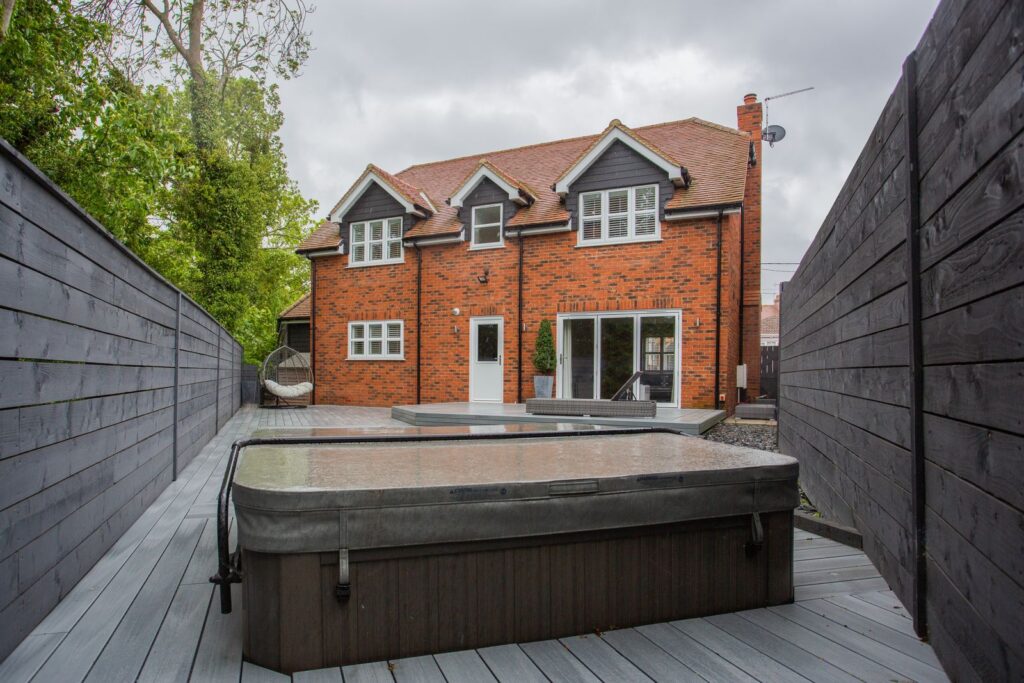
Hot tub wiring is regulated more tightly than ordinary circuits because of the combination of water, people and electricity.
- Ground-fault protection. The tub must be GFCI-protected, typically through a GFCI spa disconnect or a GFCI breaker, as the Code and manufacturer specify. Test it monthly with the test button. See GFCI vs AFCI for what it does.
- A disconnect in the right place. A disconnecting means must be within sight of the tub, positioned at the distance the Code requires so it cannot be reached from the water.
- Bonding. Conductive parts around the tub are bonded together so there is no difference in voltage between them. It is a separate requirement from grounding and is very hard to add properly afterwards.
- Clearances from overhead conductors. Overhead wiring must keep clear of pools and hot tubs. In Oakville, conductors are not permitted above pools at all.
- ESA notification and inspection. Hot tubs have their own ESA category. An uninspected tub is a problem for insurance and for a future sale.
The enclosure or fencing requirement for a hot tub is a municipal matter, separate from the electrical. In many cities a lockable safety cover satisfies it for a hot tub, but check with your city before installing.
Neighbourhood differences across the GTA
Toronto, York and East York have smaller lots, older houses and older services. Most of our work there is hot tubs rather than pools, and the route and the service capacity decide the job. In York especially, fuse panels are still common. See our local guides for Toronto, York and East York.
Etobicoke, Mississauga and Vaughan have more in-ground pools and larger lots. Hot tubs are often part of a bigger outdoor project with pool equipment, lighting and outdoor kitchens, where planning the whole load together saves running feeds twice. Alectra customers in Mississauga and Vaughan generally get one free isolation and re-energisation a year, useful if a service upgrade is needed.
Oakville requires new and replaced services to go underground and prohibits conductors above pools, so feeds and any service upgrade need planning with the landscaping. See pool and hot tub wiring in Oakville.
Winter, running costs and looking after the electrical
A hot tub in a GTA winter is a different machine from one in July. The heater works hardest when the air is coldest, and a 240-volt tub that runs its heater and pumps together will draw close to its full rated current for long stretches. That is exactly why the circuit is sized from the nameplate rather than from typical use, and why a load calculation matters more for a tub than for most appliances.
A few habits keep the electrical side trouble-free:
- Test the GFCI monthly with its test button, and reset it. A GFCI that has failed does not announce itself.
- Do not ignore repeated GFCI trips. After a thaw or heavy rain, a trip usually means moisture in a heater, pump or connection. Repeated resetting into a ground fault is how equipment gets damaged; find the cause.
- Keep the cover on. A good insulated cover reduces heater run time more than anything else, which lowers running costs and the load on your service.
- Plan for outages. In a long winter outage a tub left without power can freeze. If you have, or plan, a generator, decide whether the tub should be on it.
If you ever move or replace the tub, have the circuit checked against the new tub’s rating. Tubs are not interchangeable electrically, and a larger replacement on an older circuit is a common way to end up with a disconnect running hot.
How to compare hot tub electrical quotes
- Is a load calculation included, and does the quote confirm the service can carry the tub?
- What circuit size, conductor size and disconnect? They should match the tub’s nameplate.
- What route and what length? Through the basement, along the exterior, or trenched?
- Is bonding included?
- Is the ESA notification included?
- What happens if the panel is full or the service is short? A good quote says so up front.
Most of the difference between two hot tub quotes is route and scope. For a broader view of how electrical pricing works, see how much an electrician costs in Toronto, and for how we handle these projects, our pool and hot tub wiring page.
Frequently asked questions
How much does it cost to wire a hot tub in Toronto?
We typically quote $2,400 to $4,800 for a standard 240-volt hot tub where the panel has capacity and the run is reasonable, and $4,800 to $8,500 for long runs, trenching or a sub-panel, before HST and including the ESA notification. A plug-in 120-volt tub typically needs $600 to $1,400 of electrical work.
What size breaker does a hot tub need?
Most 240-volt hot tubs need a dedicated 40- to 60-amp circuit, but the tub’s nameplate rating decides. Plug-in tubs usually need a dedicated 15- or 20-amp GFCI-protected circuit. Always size the circuit from the manufacturer’s specification.
Do I need a permit to install a hot tub in Ontario?
The electrical work needs an ESA notification and inspection; the published fee for a hot tub is $168, and a licensed contractor files it. Fencing or enclosure requirements are set by your municipality and are separate.
Can my 100-amp panel handle a hot tub?
Sometimes. It depends on the calculated load of everything else in the house. A gas-heated home with gas cooking often has room; one with central air, an electric dryer and an EV charger may not. Get a load calculation before you buy the tub.
Can I plug a hot tub into an outdoor outlet?
Only a tub designed as a 120-volt plug-in model, and only into a dedicated, GFCI-protected receptacle that meets the manufacturer’s requirements. A 240-volt tub must be hardwired to its own circuit through a disconnect.
Can I install a hot tub on a house with a fuse panel?
Usually yes. A fuse panel cannot take a GFCI breaker, so the tub is normally fed through a GFCI spa disconnect or a small sub-panel, provided the service has capacity. Many owners replace the fuse panel at the same time.
Prices are what Northcliffe Electric typically quotes in Toronto and the west GTA in 2026, before HST. Service upgrade ranges match our published panel upgrade guidance. The ESA hot tub notification fee is from the ESA’s published 2026 residential fee schedule. Alectra’s free annual isolation applies to residential customers; confirm current terms with Alectra.