
Home » EV Charger Installation
EV Charger Installation
Home » EV Charger Installation
EV Charger Installation
Public charging stations are fine in a pinch—but waiting hours in a parking lot isn’t convenient. A home EV charger makes things simple: plug in at night, wake up to a full battery. The challenge? Most homes in Toronto and the GTA weren’t designed to handle the extra load of a Level 2 charger. That’s where professional installation matters. At Northcliffe Electric, our licensed electricians install EV chargers safely, up to code, and tailored to your home or business.
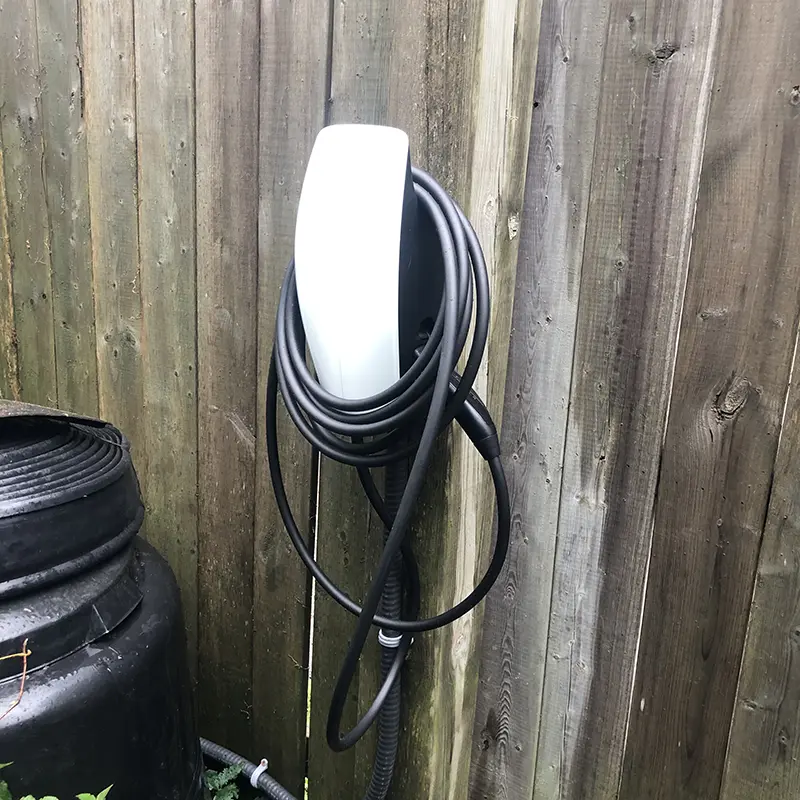
Installing an EV charger is more than mounting equipment on a wall.
Our electricians:
We set up both residential and commercial charging stations, from single homes to multi-unit properties.
The best EV charger isn’t always the most expensive—it’s the one that fits your car, driving habits, and electrical system. Brands like Tesla Wall Connector and ChargePoint are popular, but proper installation is what ensures safety, performance, and long-term reliability.

DIY charger installs may look easy, but the risks are high:
Our electricians pull permits, handle wiring, and ground systems correctly. For commercial properties, we manage larger loads and multiple chargers to meet professional standards.
The price depends on your property. Homes with modern panels and spare capacity = lower cost. Older homes often need upgrades = higher cost. We provide clear, upfront quotes. If upgrades are needed, they’re included—no surprise charges later. With a professional setup, you get safe charging, lower fuel costs than gas, and added property value.
Every home is different, so we don’t do one-size-fits-all pricing. The quote reflects your panel capacity, the wiring route, and the charger you choose — itemized before any work starts, with the permit and inspection built in.
The same job goes by several names. An EV charger, an electric vehicle charging station, an electric car charger and EVSE (electric vehicle supply equipment) all describe the unit that charges your car at home. What matters is not the name but the circuit behind it — a Level 2 unit needs a dedicated 240-volt circuit, and whether your service can carry one is settled by a calculated load, not by counting empty breaker spaces. See Level 1 vs Level 2 charging for which one your household actually needs.
Call us for a free estimate.
We install EV chargers across Toronto, York, Etobicoke, East York, Mississauga, Vaughan, and Oakville — detached homes, semis, and condos alike. Wherever you charge, we’ll make sure it’s safe, certified, and ready every morning.
Detached and semi-detached houses. Most Toronto houses can take a Level 2 charger. The questions are capacity, location and the cable route from the panel to the garage or driveway. Our guide to EV charging for detached homes walks through each.
Condos and townhouses. In a condo the corporation controls the electrical system, so the process runs through the board and the building’s capacity. See condo EV chargers in Toronto and what changed under Bill 98.
Businesses and multi-unit properties. Workplace and customer charging, fleet chargers and shared charging for rental properties, sized against the building’s service. See commercial electrical.
We install the major Level 2 chargers sold in Canada — including Tesla Wall Connector, ChargePoint, FLO, Grizzl-E and Emporia — and work with whichever unit you have bought or prefer. The charger brand matters less than three decisions we make with you:
Local guides: Toronto, York, Etobicoke, East York, Mississauga, Vaughan and Oakville.
Straight answers about EV charger installation in Toronto & the GTA
A Level 2 charger runs on a dedicated 240-volt circuit, which is a real load. We start every installation with a load calculation; many homes have the capacity, and if yours doesn’t, we’ll show you the options — often a panel upgrade that future-proofs the whole house at the same time.
Yes — EV charger circuits in Ontario must be filed with the ESA. We take care of the notification and the inspection, so your installation is documented, insurable, and done once, properly.
Usually the garage wall or an exterior spot near where you park. We plan around your parking habits, cable reach, and panel location — and use weatherproof, outdoor-rated equipment for driveway installations.
Often, yes — it depends on your building’s electrical capacity and management approval. We can assess the feasibility and handle the electrical side once your building signs off.
Your panel’s spare capacity, the distance between the panel and the charger, whether the wiring runs through finished walls or conduit, and the charger model itself. We quote it clearly up front, hardware and ESA filing included.
Once we have confirmed your service can carry the charger, most home installations take a single day on site. The ESA inspection follows separately. If a service upgrade is needed first, utility scheduling sets the timeline.
Yes. Outdoor chargers need a unit rated for outdoor use, weatherproof connections and a sensible cable route. A hardwired charger is usually the better choice outdoors because it has no receptacle exposed to the weather.
Any reputable Level 2 charger certified for use in Canada will do the job. Match its maximum current to what your car can accept and your service can carry, and decide whether you want it hardwired or plug-in. We are happy to advise before you buy.
Don’t waste time at public charging stations. Get a home or business EV charger installed by professionals who know the code inside and out.